skip to main |
skip to sidebar
I can't claim to be any expert in RnB. I sort of lost interest around the time that Missy Elliot last made a decent record (Work it?). It's fair to say though that it probably hasn't had it's best period in recent years. It is easy to forget that at the turn of the millennium, Missy's producer (Timbaland) and others like the Neptunes were being feted as the very best in the world. Magazines were waxing lyrical about their ability to use techno style stabbing beats to modernise the urban sound. Then we had Chris Brown, R Kelly's increasingly bizarre behaviour and a lot of records that sounded tired and formulaic.
Imagine my surprise then when I heard the Weeknd's House of Balloons. The Weeknd are clouded in mystery but are supposedly Abel Tesfaye (vocals) and Jeremy Rose (production) and hail from Toronto. They have made this album freely available to legally download (see link below), incredible given that its the most fresh sounding RnB album I've heard for some time. What is immediately apparent is the sense of space in their sound - clearly influenced by US chillwave and possibly even London's post dubstep scene. This all adds a slightly melancholy vibe to the production. The album take the listener on a journey through a night (or indeed a weekend) out and there are melodic hooks and crazy lyrics aplenty to keep things interesting throughout.
The opening two tracks ease us in before third track Glass table G. This starts a bit like something off the last Fever Ray album but then, three minutes in, shifts completely with a buzzy bass and vocals about the culmination of a wild night out. 'She give me sex in a handbag, I get her wetter than a wet mag' - it's sleazy, un-PC and quite brilliant. I doubt I'll hear a more compulsive piece of music all year. Next track The Morning is a much more conventional RnB track with its talk of 'pussy assed niggas' but still finds time to talk about codeine cups. Wicked games has electric guitar straight out of an 80's film soundtrack but Abel's vocal soars to create a blissed out coke haze - it's absolutely lovely in a really guilty pleasures way. By this stage, halfway through the record, an open minded listener can't help but be drawn in even if this isn't their natural territory. You feel dirty listening to it but its so good you can't help it - sort of how you feel watching Top Gun or Dirty Dancing.
The second half of the record in particular shows that the band have pretty varied taste. Indie is not an unknown quantity to Weeknd with both Siouxxe and the Banshee's Happy Home and Beach House being sampled. The band that spring to mind most though are the XX - not only because of the sense of space but also the way that they are happy to let a song unfold at it's own pace - quite a feat on a debut album where the temptation is inevitably to make every song 'matter'. A perfect exmple is Coming Down which drifts by effortlessly in the way Fleetwood Mac's Albatros would if it had R Kelly singing over the top of it. Loft Music is another highlight - 'I hear noises in the bathroom' again hints at the debauchery of the main protagonist. Final track The Knowing is frankly ludicrous. Its clearly an atempt to end things on a slightly more meaningful note and wouldn't necessarily sound out of place in a Disney movie (think Lion King) with its anthemic afro balladry.
The album as a whole is undoubtedly over the top in its hedonistic melodrama but is utterly enthralling. This is clearly a record that can only benefit from being played very loud on a car soundsystem - and how many records can you say that about recently? The production is superb and the vocal exposes a drug-addled vulnerability that many will relate to. I've been playing it to death over recent weeks and I think (especially given that its absolutely free) you should check it out too....let me know what you think.
http://the-weeknd.com/

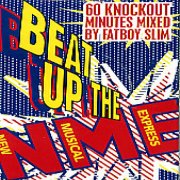
20. Beat up the NME - Fatboy Slim (1997)
A mix given away on Cassette with the NME. Norman Cook is now best known for his big beat sound and there are a number of tracks here that hint at this (most notably Pierre Henry's Psyche Rock and tracks from Psychedelia Smith and Bassbin Twins) but this also covers drum n bass (EPS and 2-Vybe's Hype the Funk - which went on to become my favourite track of the genre) and UK garage (Double 99's Rip Groove). A great listen in the car.
19. Another late night – Zero 7 (2002)
A personal favourite. I particularly love the mix of Da Lata's Pra Manha into Herbert's mix of Serge Gainsbourg's Bonnie and Clyde. This also features a number of quality mellow hip hop tracks by the likes of Madlib, Souls of Mischief and Roots Manuva. Anotherlatenight have cornered the niche in nice post-club vibes and their overall quality control is high.
18. Live in LA - Z-Trip (2003)
Don't like DJs and dance music? Try this. Z-Trip mixes up classic rock breaks (Zeppelin, ACDC, The Who) and mixes them up with hip hop beats (Jaz Z, Outkast) to devastating effect. One for the Luddites but great goofy fun.
17. Fabric - Swayzak (2003)
Techno mixes tend to leave me a bit cold. There is rarely enough variety to sustain interest over a longer period. That's why I like this one so much - despite essentially being deep techno all the way through it is varied enough to draw you in. After hearing this I've been after the Herbert mix of Louie Austen's Hoping for half a decade....also includes the wonderful DFA remix of Metro Area's Orange Alert and LCD Soundsystem amongst more obscure tracks. The blending is excellent as well.
16. Sleepwalk - Optimo (2008)
One of the more subtle mixes on this list, Glasgow legends Optimo create a mellow after hours mix which manages to be electronica without focusing on current names. Kraut artists such as Cluster are mixed with the likes of Coil, Arthur Russell and Duke Ellington. This transcends genre creating a spiritual vibe that takes you to another world.
15. Death Mix Live!! - Africa Baambaata (1985)
Recorded at a High School in the Bronx, this perfectly captures the energy and excitement of early hip hop and is hugely influential despite appalling sound quality. DJ Shadow famously copied the cover many years later. Includes the Drells, Edwin Starr and the Jackson's timeless It's Great to be here.
14. Brainfreeze - Cut Chemist and DJ Shadow (1999)
Shadow and Cut Chemist blew everyone else out of the water when this arrived in 1999. Clearly influenced by the cut and paste of Double Dee and Steinski. This is a brilliant use of classic soul and funk reinvented for the hip hop generation. Inevitably the 1000 copies pressed sold out and it has been widely bootlegged.
13. The K and D sessions - Kruder and Dorfmeister (1998)
Less a DJ mix, more a collection of mixes by DJs, this is probably owned by every coffee shop in the country. There is no doubt that the impact of this record has been dulled by familiarity. When it was first released it was like nothing else, The Viennese duo's mellow beats weaved a heady flow through Roni Size, Lamb and Depeche Mode to name but three and created the perfect soundtrack for any time of day. Their remix of Bomb the Bass's Bug Powder Dust in particular was a complete reworking of the original for the post Massive Attack generation. It sold by the bucketload simply because it was so good....Immaculately stoned.
12. Journey's by DJ, Desert Island Mix - Norman Jay and Gilles Peterson (1997)
Arguably the two most influential British DJs of the last 20 years teamed up for this effort to choose their desert island discs and both excel. Jay focuses heavily on disco with a couple of Voices of East Harlem tracks, Pattie Jo's Make me believe in you and a wonderful use of a hip hop beat over Hall and Oates' Maneater. Peterson predictably takes a more gentle route but manages to weave in Roni Size, Jazzanova and Rotary Connection's Black Gold of the Sun which has become one of his signature tunes.
11. Fabric – Diplo (2005)
For sheer enjoyment, this mix takes some beating. Heavy on classic electro (Cybotron, Debbie Deb, Freestyle) but wildly eclectic. The mix of the Cure's Lovesong into Outkast's Bombs over Baghdad is just wonderful. Brings the spirit of Fabric to the living room. Diplo has done many other fine mixes covering styles from Baille Funk to classic Psych.
10. Essential Mix – Air (1998)
There are a number of French acts that have produced DJ mixes of exemplar quality. Check out Pheonix's Kitsune Tabloid for one. Air really did excel as well though and this Radio 1 mix captures them at their best. Its all fairly mellow but its a lovely mix of the Theme from Mash, the Pharcyde, David Bowie and, somewhat predictably, Serge Gainsbourg.
9. The Document - Andy Smith
Smith was Portishead's resident DJ and this mix announced his arrival in his own right. Mixing up soul covers, funk, hip hop and beats cutting from track to track to create an exciting dancefloor mix. Includes one of my all time favourite Hip Hop songs - How you want it by Jungle Brothers featuring De La Soul as well as Marvyn Gaye and the Meters. Generally regarded as one of the best soul, funk and hip hop mixes (and there are no shortage of contenders).
8. Essential mix- Francois K (2000)
One of the definitive New York DJs. This mix by K covers many musical bases including African Drug by Bob Holroyd (just how many mixes has this track been on?!), Kraftwerk and Tribe Called Quest. The main focus though is obviously disco. Lisa Taylor's Did you Pray Today has reduced this listener to tears...
7. Logical Progression - LTJ Bukem (1996)
Drum n bass didn't leave us with much of a DJ mix legacy. A whole hour of breakbeats is too much for most people as a home listen. This mix focuses on the mellower side of the genre and focuses heavily on Bukem's own label mates including Peshay and PFM. The sound of outer space brought to the living room.
6. Renaissance- Sascha, John Digweed (1994)
You can't have a list of the best DJ mixes without having at least one straight house one. I've plumped for this because it contains some of the very biggest DJs of recent years but also because it hangs together pretty well. OK M People are on it but so are Leftfield. I suspect this was the first dance mix bought by a whole generation who had previously been buying Pop Will Eat Itself and Carter the Unstoppable Sex Machine.
5. Monk's Dream - Monk One (2002)
Wax Poetics writer and New York DJ Monkone broke at the turn of the millenium. He specialises in latin influenced house, jazz and hip hop and this is probably his best mix. Opening with a Brazilian version of Rapper's Delight its perfect for a bar-b-que.
4. A Monstrous Psychedelic Bubble exploding in your mind - Amorphous Androgynous (2008)
No matter how many DJ mixes you've listened to, I can assure you that you've never heard one like this. Taking the concept of psychedelia as its starting point the ex-Future Sound of London duo take us on a trip from Donovan to Miles Davis via the Psychonauts and David Axlerod. Noel Gallagher claimed this mix changed his life and I'd have to agree - I remember thinking upon hearing it that I could just listen to this one CD for the rest of my life. Extraordinarily ambitious in its scope and you hear something new every time. Volume 2 is great too.
3. As heard on Radio Soulwax volume 2 - 2 Many DJs (2003)
Another one that is wildly eclectic. Soulwax pretty much brought mash-ups (mixing two songs together to create one) to the mainstream with this album. Using Destiny's Child and the Stooges with Dolly Parton and 10CC might sound like a car crash on paper but because it's brilliantly mixed this appealed to the purists and the pop fans as one.
2. Gimix – The Avalanches (2000)
Certainly the only entry from Australia on this list. This mix was never officially released due to the sample clearance but reads like a history of popular culture. Bob Dylan - check. The Smiths - check. Michael Jackson - check. Despite its disparate styles the Avalanches make it seamless by mixing in their own disco house infused tracks. This is a perfect CD if you're hosting a do at home and want a bit of a party but no-one can be bothered to DJ. Whatever happened to them recording a second album?
1. Journeys by DJ – Coldcut (1995)
Unlike some of the mixes here (The Avalanches for example) this mix isn't timeless. Instead it takes you right back to the mid 1990's when Coldcut's Stealth night was the hottest night in London clubland. Focusing heavily on Ninja Tunes artists but also finding room for Boogie Down Productions, Masters at Work and even the Dr Who theme this is the art of the DJ mix perfectly realised. The listener is never quite sure where it is going next as the '70 minutes of madness' takes us from dub to hip hop via drum n bass and electronica and the spoken word samples perfectly fit the mood of paranoid, deep beats. Single tracks are seamlessly mixed to create something completely new - the ultimate articulation of a DJ. The Wagon Christ remix of 2 Player's Extreme Possibilities is a perfect example of the sheer experimentalism that is the hallmark of UK dance culture. Almost 20 years later this is still yet to be bettered.
What are the criteria for an all-time great album? A number of styles brought together in a seamless fashion must be a pre-requisite, as are strong hooks, innovation and excellent instrumentation. Other useful indicators in my own mind are a defining concept and a degree of freaked out weirdness. I’ve encountered three ‘lost’albums of the late 1960's and early 1970's in recent years that I think fulfil at least some of this criteria – Chapter 3 by Manfred Mann, 666 by Aphrodite's Child and, most recently, the self-titled album by The United States of America.
Formed in 1967 by Joseph Byrd, this New York band used electric harpsichord, electric violin and calliope as much as they did more conventional instruments. Almost uniquely for the time they didn’t use electric guitar. They embraced early electronic instrumentation using audio processors and early synthesizers evoking a more European sound than their name might suggest.
The band was never supposed to be a permanent arrangement and a tour off the back of the record's release was riddled with technical issues and drug charges which eventually led to their demise. Their self-titled record was recorded in a drug fueled haze in December 1967, produced by David Rubinson, and released in 1968 on CBS Records. The album covered a wide range of musical genres, including avant-garde folk, psychedelia, and progressive rock. Vocal duties were shared between Byrd and lead vocalist Dorothy Moskowitz.
The record was loosely about the social issues facing 60's America and took the form of a song cycle. Perhaps the best known track to British listeners is The Garden of Earthly Delights which was used by artist and sometime Super Furry Animals sleeve designer Pete Fowler on his excellent The Sounds of Monsterism Island CD. This heavy prog-rock track isn't necessarily representative of the record as a whole as there are much more esoteric delights to be had but the sheer number of styles covered makes this album difficult to pigeonhole. What is clear though is the influence it has had. It evokes not only obvious reference points like Stereolab and Broadcast but indeed the music that influenced that such as acid folk and krautrock. Portishead have gone as far as crediting the album on their track Half day closing.
Opening track The American Metaphysical Circus immediately brings to mind the vaudeville freak shows of Coney Island before giving way to a haunting vocal from Moskowitz. Hard Coming Love meanwhile is far more typical of the dominating psychedelic sounds of the day sounding rather like a female fronted Doors. Cloud Song is pastoral in feel and it wouldn't entirely surprise you if someone told you it was Vashti Bunyan or another long lost acid folk chanteuse. Garden comes next to lift the mood with its talk of gathering mushrooms and the listener is left not really knowing what style is coming next. What does come next is I won't leave my wooden wife for you, the sort of psychedelic pop song specialised in by the Kinks or Small Faces. Song by Byrd it's eccentric but charming.
The second side of the record starts on a much grander scale. Where is Yesterday evokes David Axlerod while second track Coming down is the track that most obviously sounds like Stereolab. Throughout the album as a whole there is wonderful playing and a real sense of uncontained experimentation with some truly odd electronic noises behind the vocal, but a sense of strong songwriting is also apparent. Love Song For The Dead Che is probably the most subdued track on the record but if you listen to the lyrics you can hear Byrd's communist supporting sympathies coming through. Stranded in time has a baroque feel while the final track (suite?) The American Way of Love is a disorientating finale inserting excerpts of the previous tracks into a cut and paste collage that wouldn't be entirely out of place on a Prefuse 73 or Madlib production. 'How much fun its been' a voice in the mix intones - I couldn't agree more.
Despite the widespread support of music critics, the album sold poorly, charting at number 181 in the USA. In recent years it's worth has been recognised by some and has been reissued but this is still under-valued next to Love's Forever Changes,The Velvet Underground's debut and Hendrix's Axis: Bold as Love, all of which it bears comparison to. If want a record that is varied in style, wildly experimental and well executed, you could do far worse than this. Its on Spotify or you can pick up a reissue for a tenner - not bad for some classic counter-revolutionary, avant-garde electro-acid folk-rock.

In an age where we are told that no-one wants physical musical product anymore, setting up a vinyl based record label might seem like a folly. Gerald Short has not only done this but has run Jazzman records since the late 1990's and has been successful in putting out material on a number of other labels as well. For those who don't know, Jazzman unearth the finest soul, funk, R&B (think Fats Domino rather than TLC), rock n roll and the delightfully named genre 'tittyshaker' (sleazy instrumentals) as well as some modern music influenced by the above. The result has been some wonderful music - compilations of Floridan and Texas funk, unearthed gems by Nina Simone and Letta Mbulu and albums by the super funky and wonderfully named Natural Yoghurt Band to name but a few. Jazzman thrive because they dig deeper than most to find genuine obscurities and ensure they release music and packaging only of the finest quality. I caught up with Gerald to find out how a vinyl record label survives in the Twenty First century. If you like what you read, sign up to Jazzman's podcast at
http://www.jazzmanrecords.co.uk/v2/radio.asp
Where did your particular musical journey begin? What was the record that changed your life?
Like many teenagers in the it was with John Peel. This was back in the ‘80s, although unlike most of listeners who were into the Jesus & Mary Chain etc my ear gravitated towards the oldies that he would play every now and then; pre-war folk blues, dancehall jazz 78s, ‘50s novelty hillbilly records etc. The past is so much more interesting and romantic than the present.
When did you first get the idea of setting up a label?
Back in the ‘90s I was a full-time record dealer. My best customer was myself, and I started to get quite a decent collection together, including some rare stuff that was in high demand. It wasn’t hard to put 2 and 2 together and start a label in order to reissue these records so other people could enjoy them too. I was a complete novice, with zero training, so it wasn’t easy to know where to start or how to go about the process. So I started with 45s because they were cheaper and easier to manage, doing a whole LP was more expensive, risky and harder to organise.
What reissue are you most proud of releasing?
It’s always the next one, the one that I’m currently working on which I want to be better than all the others! But some landmarks along the way were the Texas Funk album, which along with Stones Throw’s ‘Funky 16 Corners’ and 100s of bootlegs was one the first properly annotated funk comps; then again James Bell’s ‘Funky 16 Corners’ 45 was the hottest thing on the planet at the time and it was an honour to witness James himself show us the dance steps in his front room. More recently I’m still quite pleased with the Nathan Davis album although typically it hasn’t sold as well as I would have liked.
What was the thinking behind setting up the sub labels (Stark Reality, Soul Spectrum etc)
Stark Reality is/was a label set up to release modern music by current artists and bands. We started with Cherrystones, Little Barrie etc. The premise was new music influenced by old. I’m still into it but it has fallen by the wayside as I just don’t have the time or resources to do it properly. Soul Spectrum, Jukebox Jam, SOUL7 and FUNK45 are imprints for releasing music of a particular style rather than have everything on Jazzman otherwise it would get overwhelmed.
Do you still get all the 45 vinyl pressed in Nashville?
They were taking too long so I started to get them done over here. But the quality hasn’t been too good of late so I have recently started getting them done in Nashville again.
Do you think there are still lots of hidden gems out there to discover? The scene seems to be focusing on more worldwide sounds now through labels like Finders Keepers..
Discovering records is like discovering oil. The days when oil was found just bubbling up through the ground are long gone. Now you have to dig deeper, which is exactly what we do.
How often do you play out these days?
I have a young family now so I try not to be away DJing more than twice a month.
I know Keb Darge and Shadow had an influence on you. Which other DJs and producers do you rate?
I like Rex Doane from WFMU, Gaslamp Killer, Gilles Peterson when he’s down in the basement
Where's your own taste at right now?
My tastes don’t really change over the years, I’ve always liked the same stuff I just need more of it. These days I’m buying more tittyshakers than anything else because there are so many out there I don’t have and they’re easy to get hold of, many of the other things I like ie funk, modal, latin etc I either have already or are too expensive or hard to find
Any guilty pleasures?
I watched Bohemian Rhapsody on youtube the other day all the way through, it was so good I did it again…
What's the take up been like for the podcasts?
I really don’t know and I don’t really want to know. If I see the stats and they are low then it might put me off doing them at all. But I do know that some people listen, which is fine with me, I’m not about huge figures whether it’s record sales or radio listeners, I’m in the minority-music business after all, and I’m fine with that really.
What's planned for the remainder of 2011 and beyond?
Business as usual. Old, forgotten and obscure nuggets and gems, re-released and curated to be appreciated by a global audience. Next is an album by French jazzman Jef Gilson, his life story and best music covered by one album. To me this is the ultimate work, it does not get better or more important than this; the album will be responsible in representing his life’s work, something I don’t take lightly, and it’s something I am very proud, and humbled, to be able to do.
It’s 1969 and a decade which has seen such social and political change is coming to an end. The Beatles are on the brink of splitting up and the Stones are facing their own demons at Altamont while Jimi has just months left to live. In Chicago however, a mixed-race, mixed-gender band have just released an album of cover versions which will create a considerable musical legacy and provide a launch pad for one of the greatest and most unique soul voices…
The significance of what the Rotary Connection were doing and what their uniquely talented singer Minnie Riperton would go on to achieve artistically, wouldn’t really be appreciated until long after their demise. Nevertheless, they paved the way for Sly and the Family Stone, Funkadelic and the exponents of the Philadelphia sound to name just a few. Minnie herself has been cited as an influence on everyone from Mariah Carey to Jill Scott.
Struck down by cancer at the age of 31 we will never know what she might have achieved had she lived. But she leaves an extraordinary body of work which encompasses the soul movement of the mid 1960’s, the psychedelia of the end of that decade and the more contemporary smooth soul sound of the 1970’s which would eventually lead to disco. In recent years, her work and that of the Rotary Connection’s legendary producer, Charles Stepney, has found a new audience via a wide range of artists spanning soul, funk, hip hop and dance all paying their dues to the woman with the extraordinary voice with a five octave range.
Minnie was born in the South of Chicago in 1947, the youngest of eight. It didn’t take long for her parents to figure out that her voice was unique and they sent her to an operatic voice coach who encouraged her to make full use of her voice – not least the 7th octave generally regarded as beyond the range of most opera musicians. At the time, Chicago was a breeding ground for a new soul sound being driven forward by artists such as the Impressions featuring Curtis Mayfield as well as the jazz of the Ramsay Lewis Trio and the blues sound which had thrived on the Chess record label.
Minnie soon fell in love with these sounds admitting ‘I got swayed off my path once I got a little rock n’ roll dangling in front of my eyes’. She got her break when The Gems, a local act signed to Chess, parted way with their singer and Minnie was plucked out of High School to fill the gap. The Gems released a couple of singles which didn’t make the national chart but did well in regional markets. The group dissolved in 1966 and Minnie released a single Lonely Girl as a solo act under the name of Andrea Davis. It did well locally but her vocal style featuring an impressive range and distinctive falsetto was not typical of female black singers of the time and failed to go any further.
Meanwhile, at Chess, Leonard Chess had given his son Marshall his own label called Cadet. Marshall, a fan of the emerging British acts had the idea of fusing rock and soul sounds into a single act. This act would become known as the Rotary Connection.
Minnie was, by this time, a secretary at the label but Marshall brought her into the fold as a foil for an experienced male singer-songwriter, Sidney Barnes. Barnes still remembers the first time the band heard Minnie’s unique voice in the studio; ‘we just sat looking at each other thinking, what the hell was that?’ Labelmate Terry Callier was another drawn to Minnie’s unique voice and she sang backing vocals on a number of his own compositions. He recalls, ‘on some passages, we used Minnie like a synthesiser because her tone was so unique. She would use the high part of her range as part of a song rather than just singing it’. The result was an ethereal wail that would almost glide over the rest of the orchestration creating a sense of other-worldness which suited the psychedelic times.
At first Marshall himself produced the band. Their eponymous debut album was released in 1967 and featured original songs as well as overblown psychedelic soul versions of standards such as Like a Rolling Stone and Ruby Tuesday. For second album Aladdin however, one of his copyists Charles Stepney took on the role to produce music which managed to fuse classical orchestration with soul vocals and rock rhythms. This proved a real turning point with tracks like Magical World allowing Minnie to explore her full vocal range with her soprano soaring above Stepney’s stately swell. Stepney would use a 30 piece orchestra to provide lavish arrangements to underpin the main band and thus take the music beyond the usual confines of the time.
Live, the band could not hope to replicate these sounds and so Barnes took on more of a leadership role. Minnie had initially been unsure about using her vocal range in the live setting so Stepney had used a theramin which sent tripped out audiences wild. Minnie, seeing the impact of this, soon took the high pitched sounds on herself and the band had a real point of distinction. Barnes recalls ‘The night before, Min decided she doesn’t want to do the high thing but of course, people at the gig were dropping acid and mescalin and there were strobe lights and everything so by the time we were through using the theramin the place was crazy. After that Minnie said OK I’m doing it. We never looked back. After that we were signing autographs and doing radio.’

The Connection soon gained a reputation as an impressive live band and supported both the Stones and Led Zeppelin. They were also invited to play Woodstock but instead chose to play a festival in Canada instead because it was less far to travel. This was symptomatic of the band’s luck more generally. Despite recording seven albums of experimental but accessible material they struggled to make ends meet. ‘Booking agents were robbing us. They were driving Mercedes while we were still catching the bus’ remembers Barnes. The band also released a Christmas album (Peace) in 1968 and a full covers collection in 1969 (Songs) which was probably their musical peak and featured a versions of The Weight, Sunshine of your Love and an almost unrecognisable version of Otis Redding’s Respect.
The intensity of recording five albums in just over two years began to take its toll and the sale of the Chess label to GRT a subsidiary of Universal and the death of Leonard Chess meant that the band had became increasingly unstable. Sidney Barnes left soon after and Minnie began to look at the possibility of a solo career. By this time, she had fallen in love with Dick Rudolph, a local club owner who had become a lyricist for the band after Minnie had played one of his songs to Stepney. Minnie’s debut, came out in 1969 and was produced by Stepney as well as featuring the Ramsay Lewis Trio as the rhythm section. Without a full band ensemble, Riperton’s voice was able to breathe and the result was stunning. One track in particular, Les Fleurs, a song sung from the perspective of a flower, was extraordinary for combining folky tenderness in the verses with real intensity in the chorus. More than any other in her catalogue, it is this song that has reinvigorated interest in Minnie in recent years. Rediscovered by a new generation thanks to DJs such as Gilles Peterson and covered in 2001 by jazz dance act 4 Hero. It has since become a classic end of night torch song at club nights around the world.
The album did not sell in huge quantities, partly because it was poorly promoted. Minnie claimed ‘Chess did nothing for the album whatsoever. I put a lot of work and energy into it. I was kinda hurt when it didn’t make it.’ However, it gave Minnie the impetus to become a solo singer. She recorded a final album with a new line up of the Rotary Connection – Hey Love (which featured another future club classic in Black Gold of the Sun) and left Chicago to travel around the US with Rudolph for two years before they finally settled in Florida and then California where Minnie had befriended the soul superstar who would have such an impact on the next phase of her career.
In 1973, Stevie Wonder was at the height of his powers. He had just crafted soul masterpieces Innervisions and Talking Book and was pushing musical boundaries forward again with the Moog influenced Fulfillingness First Finale. Having met Minnie at Chicago’s Black Expo in 1971 Stevie had followed Minnie’s career with interest and had claimed that ‘When Minnie sings, I feel my insides rush and quiver.’ He invited her to sing backing vocals on the album and soon she was touring as a member of his tour entourage Wonderlove.
Wonder subsequently agreed to co-produce Riperton's 1974 album Perfect Angel, which would include the international bestseller Lovin' You; the record that would eventually make her a household name. The album fused soul, country and funk and still stands up today as an unsung classic of its time. Reasons was a funky, guitar driven opener, the first fruit of Minnie’s new songwriting partnership with her (now husband) Rudolph while the jazzy Take A Little Trip could have been an outtake from Talking Book especially as it was written by Wonder and his wife Syreeta Wright. It was fourth single Lovin’ You however which would come to define the album and for many, Minnie’s career as a whole. An American number one hit in the Summer of 1975, it has since become a karaoke and love compilation staple which does Minnie a disservice for there can be few songs that illustrate the flush of first love quite so beautifully. The falsetto at the end of the chorus is the most memorable part of the song (famously being sampled by the Orb on their debut album) but check out the bridge and its ‘everytime that we, ooh’ for the definitive evocation of post-coital bliss. The song went on to vindicate Minnie’s career but also came to define it at the expense of her other material.
Subsequent LPs 1975's Adventures in Paradise and 1977's Stay in Love failed to repeat its success as record companies struggled with promoting a black woman who didn’t sing straight rn’b but both contained excellent material. A particular highlight was the track Inside My Love which would later feature in Quentin Tarantino’s Jackie Brown soundtrack. By this time, however, Minnie had been diagnosed with breast cancer. She was determined to use her profile to highlight the need for early detection and publicly announced her diagnosis on the Tonight Show. She underwent a mastectomy in 1976 and later became a spokesperson for the American Cancer Society, earning a Society Courage Award from President Jimmy Carter. Minnie continued performing despite her declining condition claiming ‘Just because a woman has had a mastectomy and now has one breast, there’s no reason to think her life has been ruined – sexually or physically I have three scars – one on my leg, where I was hit by a car when I was a kid, one from having my babies, and now this one.’ Sidney Barnes would hook up with Minnie again in the last part of her life and recalls ‘us crying at each other at the mic when we sang the song Memory Lane one time.’ 1979's Minnie was the final record completed during her lifetime - she died in Los Angeles on July 12 of that year and Stevie Wonder sang at her funeral. Unreleased vocal tracks with new instrumental backing comprised 1980's posthumous collection Love Lives Forever and a tribute album featuring Wonder, Michael Jackson, Roberta Flack and others followed soon after, highlighting the respect she was afforded by her peers.

Minnie was a unique artist – pushing the boundaries at a time when black women were expected to sing only soul or funk. Her voice was truly memorable and once heard never forgotten. Unlike many of today’s female soul singers who struggle to hit the very top notes, her voice seemed to glide back and forth through the scale and was versatile enough to sing simple love songs or provide a spooky falsetto over the top of a rock band. Despite singing a number of songs that can truly be regarded as classics she does not receive the plaudits of Aretha or Diana and yet in many ways her career is more interesting and varied than both. She was also well liked within the industry with all her peers speaking of the happy woman who refused to let her illness stop her doing what she loved. Even today a fun run in Minnie’s memory takes place in Los Angles annually to raise funds to fight the disease that killed her. Asked how he remembers Minnie, Terry Callier seems a little lost for words but sums up the thoughts of those who knew her. ‘She was a beautiful person and she still is.’
3 to get
The Rotary Connection Album - Songs
A full on collision of soul and rock covers showcasing the multi instrumental and layered vocal approach taken by Charles Stepney which utilised Minnie’s voice more as an instrument rather than a voice in itself. Check the version of Otis Redding’s Respect.
The classic debut - Come into my garden
Fusing the orchestration of the Rotary connection with a folk sensibility Minnie’s debut is a thing of great beauty. Les Fleurs provides the main focus but other standout tracks include jazzy Completeness and folky epic Expecting.
The best seller - Perfect Angel
Lovin’ You is the one everyone knows – on every romance compilation since – but this album perfectly highlights Minnie’s versatility. Reasons is a funky opener and Take a little trip written by producer Stevie Wonder and his late wife Syreeta Wright provides another highlight.
Its nearly 14 years since the death of Fela Kuti, the undisputed king of Afrobeat, but his legacy is stronger than ever. A sell out Broadway and London musical about his life, Afrobeat bands springing up from San Francisco to Lagos and African acts like Staff Benda Bilili and Mariam and Amadou selling records and live dates around the globe.
The key African music dates in the UK over the last decade have been via Music Beyond Mainstream's 'Africa Soul Rebels' banner. Each year they bring together a bill of African acts of differing styles to tour the UK and previous years have seen performances by giants like Baba Maal, Salif Kieta and Tinariwen. Fittingly, this year the bill is headlined by Kuti's youngest son Seun and his (and formerly his father's) band Eygpt 80. Kuti has just released his From Africa with Fury LP and is promising a full band. Support comes from acclaimed Malian electronisists Donso. I caught up with tour organiser Guy Morley to find out more about the tour...
It’s quite a coup to get Sean Kuti this year. How did you manage to secure him?
It was about 8 years ago that I first saw Seun Kuti, with one of his first few gigs with Fela’s old bad Egypt 80. I was fortunate enough to see Fela perform a couple of times and when Seun walked on stage it was like watching a young Fela. He had just left Lipa in Liverpool – We all know he was a very talented musician and he had such on-stage charisma.
Seun kept the power of the traditional Afrobeat sound – running along at slower pace of 106 to 120 BPM gives those horns all the punch you’d ever want. Over the intervening years I have seen him quite a few times and he has just got better and better. Last year Brian Eno was guest artistic director of Brighton Festival and I helped him bring over Seun and the band from Lagos. The show they performed with Tony Allen was just sensational – and I talked to him then about coming on-board for African Soul Rebels. He liked the idea and we are really excited to have him.
Was there a sense that this was a good year to get Sean given the warm reception for the Fela musical at the National Theatre?
Seun is definately the man of the moment. The Nigerian elections – the resurgence of Afrobeat (helped by Fela!) His brilliant new album co produced by John Reynolds and Brian Eno have all been factors....... But I have been a big fan since the beginning so it’s just a great coincidence that all this has come together now.
Why did you go for Donso as support?
Donso’s album really turned my head – such a clever mix of traditional Malian sounds with an electro groove. When I saw live footage of them – I knew it would make sense to put them onto an African Soul Rebels tour. Fusions are really hard to achieve – when they work they are brilliant and change attitudes and music. Too often they don’t work – welded together to cross over markets. Donso achieved that rare balance and got the fusion right.
I notice you’ve changed the format this year, moving from three bands to two, what’s the thinking behind that?
Mostly we wanted to give Seun a full set – he has 18 on stage in the most incredible show. Three acts in one evening restrict set times..... It just would not be fair on the audience or Seun.
Has the concept of Africa Soul Rebels become a little outdated with the breakthrough of the likes of Staff Benda Bilili and Amadou and Mariam or is there still a need to pull people into venues to support African music in this way?
The need is as big as ever. I don’t think the world music niche categorises African music so much anymore – and I hope African Soul Rebels has played a role in the change. The need to increase the visibility of African Music is really important. This is Seun’s first UK tour – it will have a bigger impact and all the extra media coverage African Soul Rebels brings. African Soul Rebels grows from strength to strength – I’m really happy that politics are in the fore this year...... Seun, like his father, wears his heart on his sleeve..... and speaks his mind......... Rebels by name – rebels by nature.
Who else would you be keen to book?
It’s understandably difficult to catch the next big artist on the rise. So I’m not going to predict that one just yet. Here are some of the artists I would love to see on the bill though. Yousou N’Dour (Senegal), Ayub Ogada (Kenya), Sven Kacirek. (Kenya / Germany), Ethiopiques (Ethiopia), Jupiter Bokondji and Okwess International (Congo) – to name just a few.
Are there still tickets available?
There are still tickets for all the shows. And they are.......
WED April 13 London, Royal Festival Hall
FRI April 15 Northampton, Royal and Dearngate
SAT April 16 Edinburgh, Usher Hall
SUN April 17 Bangor, Bangor University
MON April 18 Manchester, The Ritz
TUE April 19 Bristol, Colston Hall
WED April 20 Basingstoke, The Anvil
THU April 21 Poole, Lighthouse
The story of the history of modern music is pretty straightforward right? The million dollar quartet, Elvis, The Beatles, Dylan, Floyd, Bowie, Punk, The Smiths, Madchester, Britpop, The Strokes/White Stripes, Radiohead, The Arctic Monkeys.
Wrong.
How about this for an alternate history? Robert Johnson, Hank Williams, Sam Cooke, James Brown, 13th Floor Elavators, Fela Kuti, Parliament, Kraftwerk, Patti Smith, Reggae, Kate Bush, Public Enemy, Detroit Techno, Drum n Bass, Massive Attack, The Beta Band, Daft Punk, Skream and Benga?
Ironically, the second list probably contains more people who can realistically be considered true innovators and musical genius in the world of music but you would never believe it from the coverage of music in the mainstream and musical press. Time and time again The Beatles and Dylan leap out from the shelf in WH Smiths and we are faced with the 100 greatest Neil Young tracks or another Radiohead feature.
This isn't to do any of these acts down, they are all great artists in their own right but the fact is they've been done. The public is aware of them and there is very little to say that hasn't already been said.
So, why do journalists and editors persist with the same old faces? The first reason is undoubtedly financial. Simply, The Beatles, Dylan and the Stones have huge fan bases that will buy anything featuring them. But how will we ever know if other artists could sell if we never give them coverage?
Secondly, it doesn't take a genius to work out that the music journalism industry is dominated by white, (increasingly middle aged) men. Many were from either the psychadelic generation whose foundation was the Beatles et all or from the punk years a decade later. Most simply write about people like themselves.
Its interesting to note any of the great acts in the second list were recognised retrospectively as great innovators long after the event. There was a collective sneering from music journalists against synthesized music in the late 70's/early 80's as this wasn't deemed real music compared to guitar music which was seen as more authentic. A similar situation was faced by Acid House, then Drum n Bass and most recently Grime. Journalists clearly don't like to think they were wrong at the time and so persist in extending these myths.
Actually, straight guitar music is extremely regressive. All musical innovation that is possible on this one instrument has probably been exhausted (having reached a creative apex in my opinion with grunge) and in fact the more interesting 'indie acts (Flaming Lips, MGMT, Radiohead) are the ones that embrace other instruments, electronics and styles or those that consciously embrace a retro sound as part of their identity (White Stripes, Richard Hawley).
The simple fact is that if a band like Pink Floyd or certainly Massive Attack was starting out today they would probably find it difficult to get coverage beyond the odd new artist feature. Few publications (NME possibly excepted) would stick a new band on the cover and certainly not one that doesn't fit the guitar band template. I think Madlib or Boards of Canada have done far more to warrant a magazine cover than The Vaccines or The Hurts and they've probably sold more records but they simply don't fit most magazines perception of what makes a marketable artist (young, white, male, guitars). The result is that conservatism is perpetuated with the majority of people who only have time to dip into music thinking that these are the acts to listen to. They are being duped without even realising it and it results in a racist, sexist, ageist approach to musical consumption.
If you write for a music magazine and read this do us all a favour - take a risk - find an act that are female or black or who use electronics rather than guitars and write about them. You joined this industry to write about the music you love so challenge yourself to find something really new and different rather than recycling the same old crap. Editors, employ more younger writers and be open to their ideas about the artists of now which are really going to leave a legacy. We'll benefit from a golden age of music I assure you. I thank you...